It is really important not to underestimate the importance of good hydration for those receiving care at home.
How much should we drink each day?
The amount depends on several factors, including climate, activity and diet. In a moderate climate such as the UK, the Food Standards Agency recommends drinking at least 6–8 cups or glasses of water (or other fluid) a day to prevent dehydration.
How can we spot dehydration?
You can monitor hydration by observing urine colour — it should be clear or pale. Lighter-coloured urine throughout the day is a good sign that someone is drinking enough. Other symptoms of dehydration include:
- Feeling thirsty
- Dark yellow, strong-smelling urine
- Feeling dizzy or lightheaded
- Feeling tired
- A dry mouth, lips and eyes
- Passing urine little and fewer than four times a day
Why older people are more at risk
Older people are often more frail, with reduced mobility. This makes it harder both to get a drink and to reach the toilet — and some people deliberately drink less to avoid trips to the bathroom. Those with poor memory may need prompting to drink enough. As we age our sense of thirst also fades, and our kidneys work less efficiently, so staying well hydrated becomes more important, not less.
Dehydration is dangerous. It can cause dizziness that leads to falls, as well as tiredness, confusion and constipation, and it increases the risk of urinary tract infections.
Practical ways to encourage drinking
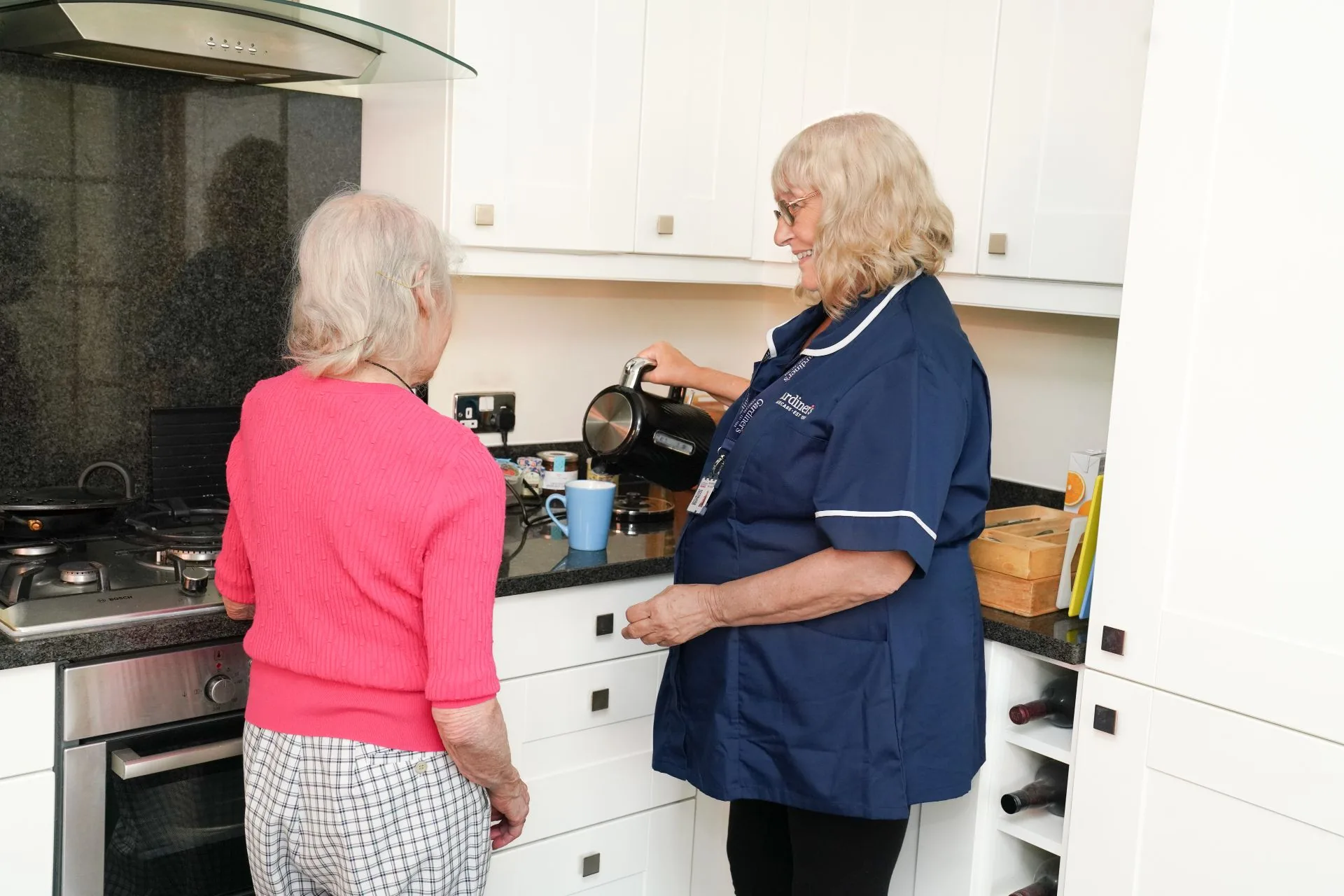
- Offer a drink as soon as you arrive, and encourage sips during your visit
- Leave a drink within easy reach for later
- Find out what the person actually likes to drink
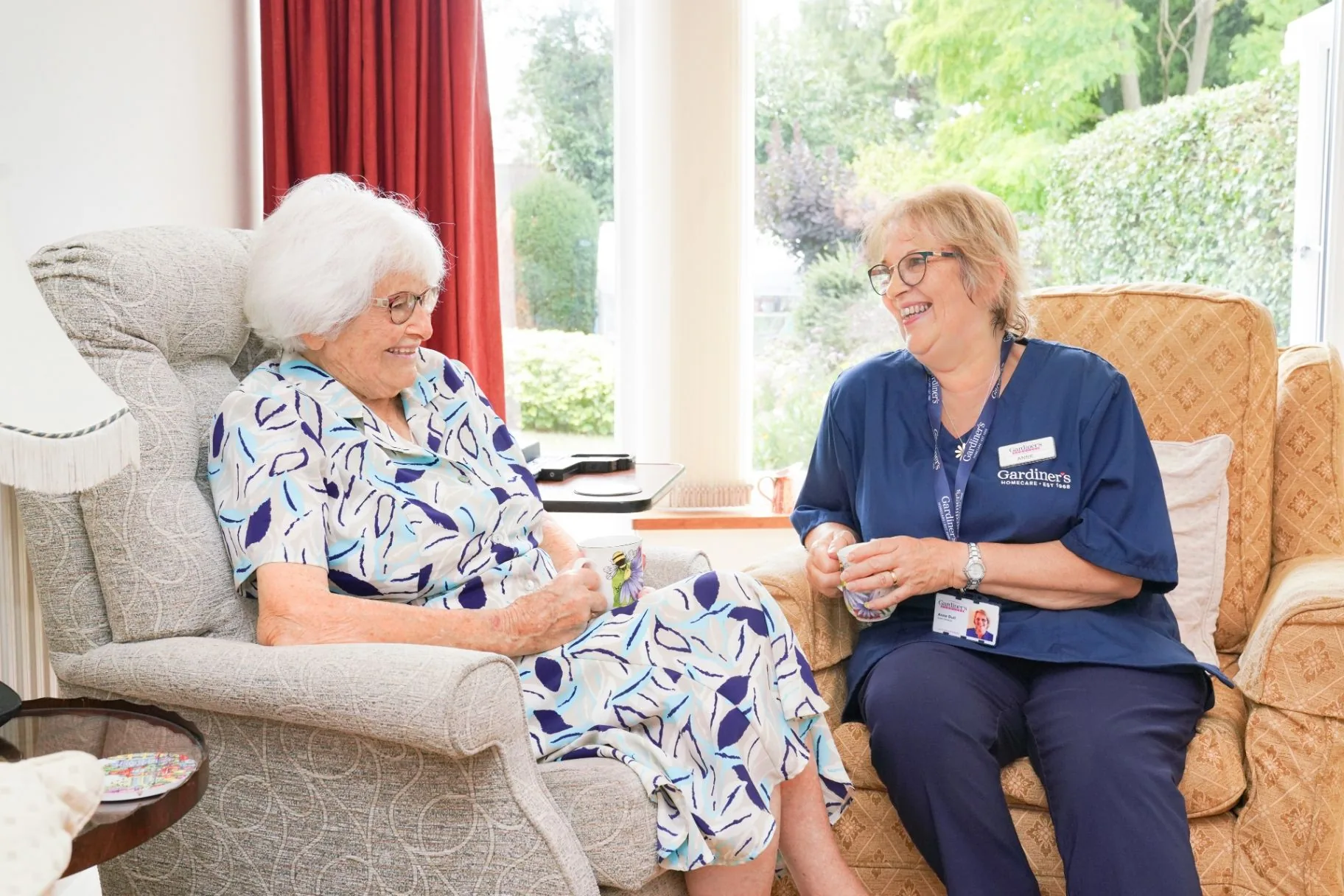
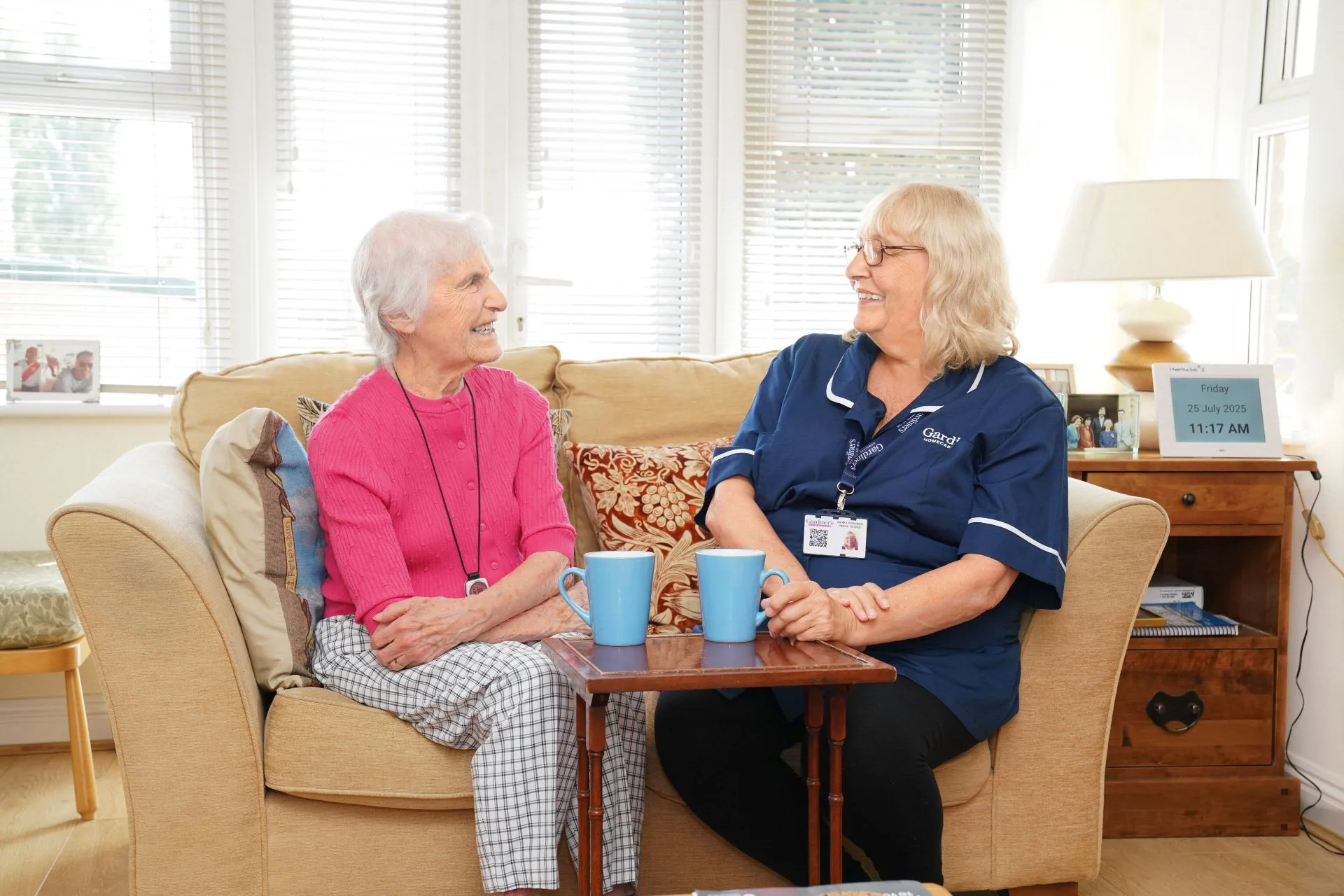
- Make drinking social — "shall we have a cup of tea?"
- Offer food with a high water content, such as soups, jellies, ice cream or melon
- Encourage drinking even when they don't feel thirsty; by the time thirst kicks in, the body has already lost fluid
- Keep water constantly available, and consider a simple daily routine (a glass after breakfast, one before lunch, and so on)
You might also have heard of Jelly Drops — a sweet designed to boost daily water intake, invented by Lewis Hornby after his grandmother Pat, who had dementia, was admitted to hospital with severe dehydration. Presented like a box of chocolates, they are 95% water, low in calorie and easy to eat, making them a clever way to help people who struggle to drink enough (though anyone with swallowing difficulties should check with a Speech and Language Therapist first).
Perhaps Gardiner's can help. A daily visit from our care workers may be all that is needed to encourage a loved one to drink more — and the reassurance of knowing someone is coming to help with the bathroom can give those with mobility issues the confidence to keep their fluid intake up.
Read more about water, drinks and your health on the NHS website