Get home safely, and recover well.
Coming home from hospital can feel like the finish line, but it’s often the point where the most support is needed. We help people recover safely in their own home — with visiting, overnight or live‑in care that bridges the gap between ward and independence.
Speak to us0118 334 7474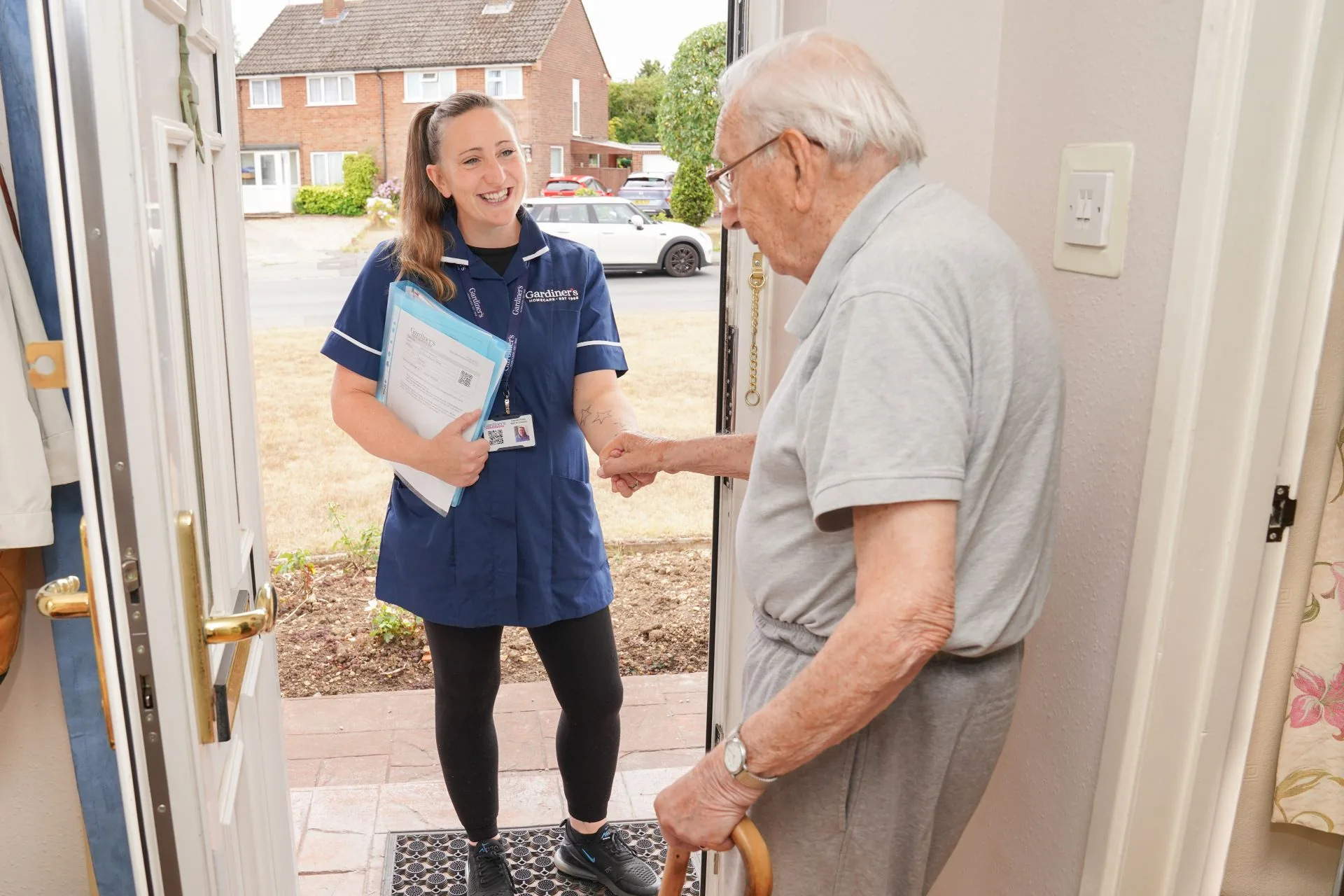
Hospital discharge care is support for the first, fragile stretch at home.
Leaving hospital is a relief, but the first few days and weeks at home can be harder than people expect. Medication routines change, energy is low, mobility is uncertain, and the smallest tasks — making a meal, getting to the toilet, remembering a tablet — can feel enormous.
Discharge care is simply someone being there to help with those everyday things while strength and confidence return. It can be a few visits a day, overnight support, or a live‑in carer for a short spell — whatever matches the situation and the recovery.
Good discharge care is often what stops a readmission. It catches missed medication, poor eating, falls, anxiety and the things that slip when someone is suddenly home alone after a period of being looked after.
The practical things that make recovery possible.
The focus after discharge is on safety, nutrition, medication, mobility and confidence. Our carers are trained to spot the early signs that recovery is stalling — and to act before it becomes a crisis.
The first few days, handled carefully.
- A warm welcome home and a quick safety check
- Picking up the routine from the ward discharge notes
- Medication prompts and a simple medication chart
- Making sure the bed, bathroom and kitchen are easy to use
- Removing trip hazards and keeping essentials within reach
- A quick call to the family so everyone knows you're home
Dignity and patience while you get your strength back.
- Help getting washed, dressed and ready for the day
- Support with toileting and continence
- Assistance with bathing, showering or bathing alternatives
- Skin checks and pressure-area care after bed rest
- Gentle mobility support and encouraging safe movement
- Everything done at your pace, not ours
Food and drink that aid recovery.
- Preparing meals matched to any dietary advice
- Encouraging fluids and snacks through the day
- Sitting with you while you eat, not rushing off
- Watching for swallowing difficulties or loss of appetite
- Light shopping to restock the fridge
- Keeping the kitchen and dishes in order
Helping you get back on your feet.
- Prompting and supporting prescribed exercises
- Encouraging short, safe walks around the home
- Helping with mobility aids and equipment
- Noting progress and anything that seems stuck
- Communicating with physiotherapists or district nurses
- Building confidence so you can do more for yourself
The days after discharge are when people are most likely to fall, miss medication or stop eating.
These are the situations where discharge care at home most often helps — keeping recovery on track and giving families confidence.
Some people need more than home care after a hospital stay — for example, active wound care, IV antibiotics, monitoring after a heart attack, or a level of confusion that makes the home unsafe. In those cases a community hospital, reablement bed or rehabilitation unit is usually the better first step. We’ll always be honest if we think that’s the right answer.
- 01
After an emergency admission
A sudden fall, infection or flare‑up can leave a previously independent person weak and a bit shaken. We can step in the day you get home, so the house is safe, the first meals are prepared, and someone is there to help with medication and personal care.
- 02
When a partner or spouse can't manage alone
If the person at home usually does the caring, a hospital stay can throw the whole household off balance. A few days or weeks of visiting care — or a short spell of live‑in care — gives the family time to recover and work out what's needed next.
- 03
While waiting for a care package
NHS or council reablement packages are often shorter than people expect, and sometimes there are gaps before the next assessment. We can bridge that gap with the same carer, so recovery doesn’t stall while the paperwork catches up.
- 04
For short-term reablement
After a hip replacement, stroke, heart attack or infection, the goal is usually to get back to independence. We support the daily routine, encourage safe activity and feed back to professionals so reablement has the best chance of working.
- 05
When discharge is fast and family live far away
Hospitals often discharge quickly, and family may not be able to drop everything. We can meet the ambulance, get the house ready, collect prescriptions and keep relatives updated — so no one is left managing alone.
- 06
If readmission feels likely
Loneliness, missed medication, poor nutrition and anxiety are the things that often send people back to hospital. Regular visits tackle those risks directly — someone there to notice, prompt, reassure and act.
Recovery is not just medical — it’s practical.
Three things make our hospital discharge care genuinely useful to families and professionals.
Set up before you leave hospital.
Wherever possible, we arrange a home assessment and a provisional care plan before discharge day, so the carer knows exactly what the ward team has said. That means the first visit is productive, not just a fact‑finding exercise.
We work with the discharge team.
District nurses, occupational therapists, physios, GPs and ward staff all have useful information. We read the discharge summary, ask the right questions, and keep notes that other professionals can actually use. Good handover is the thing that stops people bouncing back.
Flexible, reducing over time.
Recovery isn’t linear. We might start with several visits a day, drop to one, then stop when you’re ready — and pick up again if there’s a setback. You’re not locked into a contract; the care flexes with the recovery.
Standard rates, no discharge surcharge.
Hospital discharge care is priced as standard hourly, overnight or live‑in care. There is no premium for it being short‑term or urgent. The rates on our pricing page are the rates you’ll pay.
- A free home assessment before or on discharge day
- A clear, written care plan shared with the family
- No setup fee, no long-term commitment
- Care that flexes as recovery improves
After Dad came home from hospital, we were all so worried about leaving him on his own. Gardiner's arranged visits from the very first day, and it made all the difference. He got his confidence back, ate properly, and we didn't have that awful fear of another call in the night.
What families ask us about hospital discharge care.
Can you start the same day someone is discharged?
Often, yes. We can’t promise it in every case, but if we have a few days’ notice we can usually have a carer ready to meet the person at home. In an emergency we’ll do our best to cover the gap with what we have available, and then put a regular plan in place.
Do you liaise with hospital discharge teams?
We can. We’re happy to speak with ward staff, occupational therapists or district nurses, and we always read the discharge summary. We can’t replace clinical care, but we can make sure the day‑to‑day support matches what the hospital asked for.
How long does hospital discharge care usually last?
It varies from a few days to a few months. Some people need a week of twice‑daily visits to get back on their feet; others need a longer spell of live‑in support after a major operation. The plan is reviewed regularly and reduced as soon as it’s safe.
What does hospital discharge care cost?
It’s priced as standard hourly, overnight or live‑in care — there’s no separate discharge premium. Hourly visits start from £39.50, and live‑in care from £1,500 per week. You can see every rate on our pricing page.
Someone coming home from hospital and not sure what support to put in place?
Tell us the situation, the discharge date and what's been arranged so far, and we'll work out the right level of care — whether that's a few visits a day, overnight support, or a short live-in spell.
Mon–Fri 7:30am–5pm · Out of hours, leave a message and we’ll call back.