Do you provide care at home for someone with sight loss? Small, simple changes can help to create a safe and accessible environment. Here are some of the steps that can help.
Eating and drinking
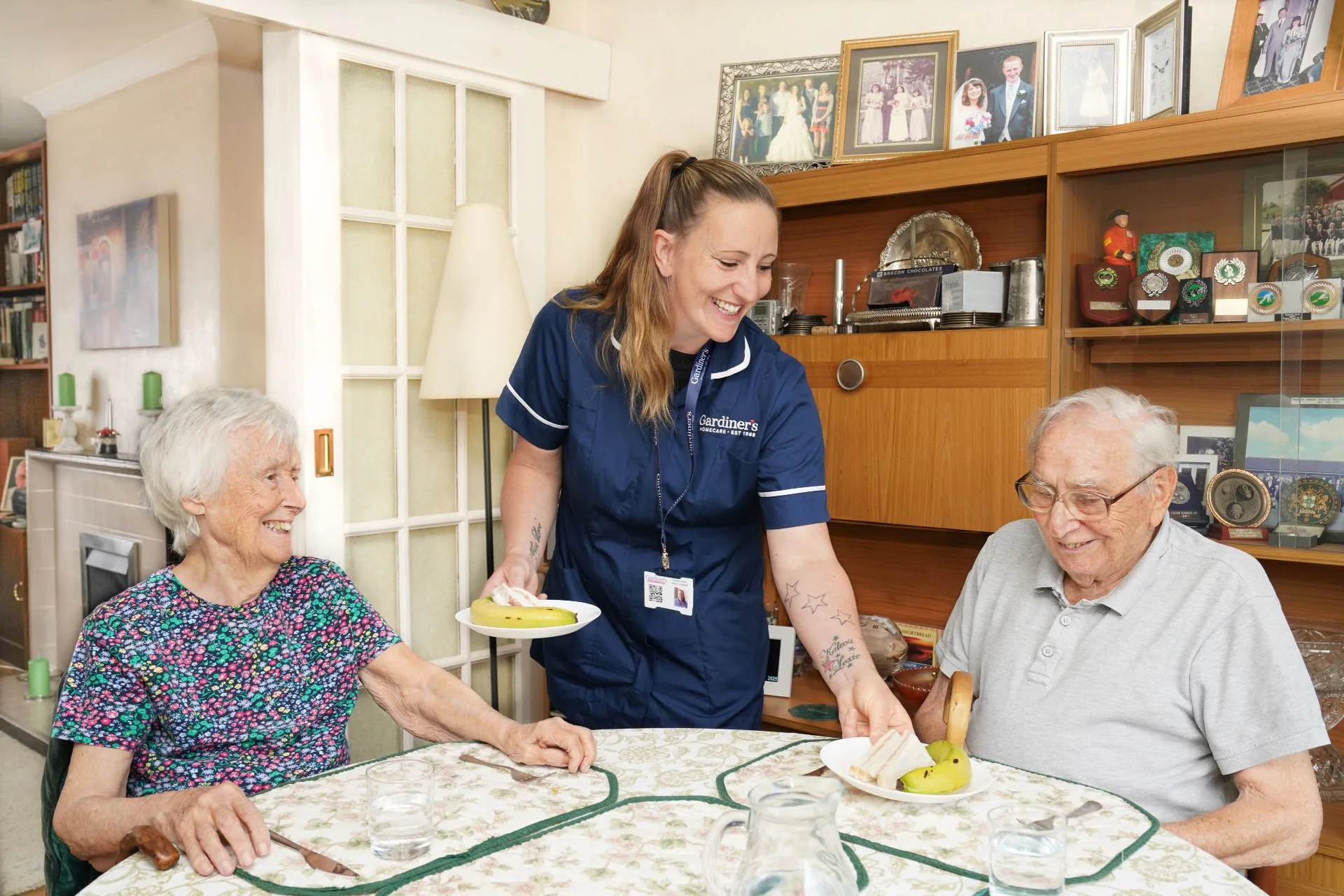
Mealtimes can be made easier by using:
- Contrasting colours on the table — for example, a tablecloth that helps the plate stand out
- A "clock" system, explaining "meat at 12 o'clock, vegetables at 3 o'clock", and so on
- Raised dots stuck onto items to help tell similar shapes apart, such as salt and pepper
Entertainment
- Talking Newspapers supply audio versions of a range of local and national newspapers
- RNIB's Talking Books service has thousands of titles free of charge
- RNIB's library offers a huge range of books in braille or large print
Technology
There is a huge range of accessibility aids available — for example, talking microwaves, or level indicators that beep when liquid is close to the top of a mug. Voice assistants such as the Amazon Echo can make a dramatic difference, allowing people to do online shopping, get the news, check the weather and more, all by voice.
Watch for signs of deterioration
It is crucial that any signs of deteriorating eyesight are reported to the person's GP. Watch out for difficulty doing activities that were previously no problem, holding items closer to the face, persistent headaches, or red eyes and discharge. Many GPs and opticians will do home visits — just ask.
Further help
The RNIB has lots more information about the services and aids available for people living with sight loss.
Why not contact Gardiner's to see how we might be able to help you or a loved one.