Home care in Goring & Streatley, since 1968.
Twin villages, two counties, one community — and a core part of our patch from the start. Hourly visits across the village and surrounding parishes, and live‑in care across the wider region.
Speak to us about Goring & Streatley0118 334 7474A core part of our patch since the start.
Goring sits in Oxfordshire on the east bank of the Thames; Streatley sits in Berkshire on the west. They’re joined by Goring & Streatley Bridge and have been more or less inseparable since it was built in 1837. The high street, the GP surgery, the railway station, the deli, the pubs — daily life crosses the bridge several times in either direction. Most local people speak of “Goring & Streatley” as one place, and so do we.
We’ve been arranging care here since Dorothy Gardiner founded the agency in 1968. The Goring Gap is a small patch of country — a couple of villages and the parishes that fold into the hills around them — and small patches of country are the kind of place where word travels and reputations matter. Most of our clients here have come to us through someone who recommended us in person.
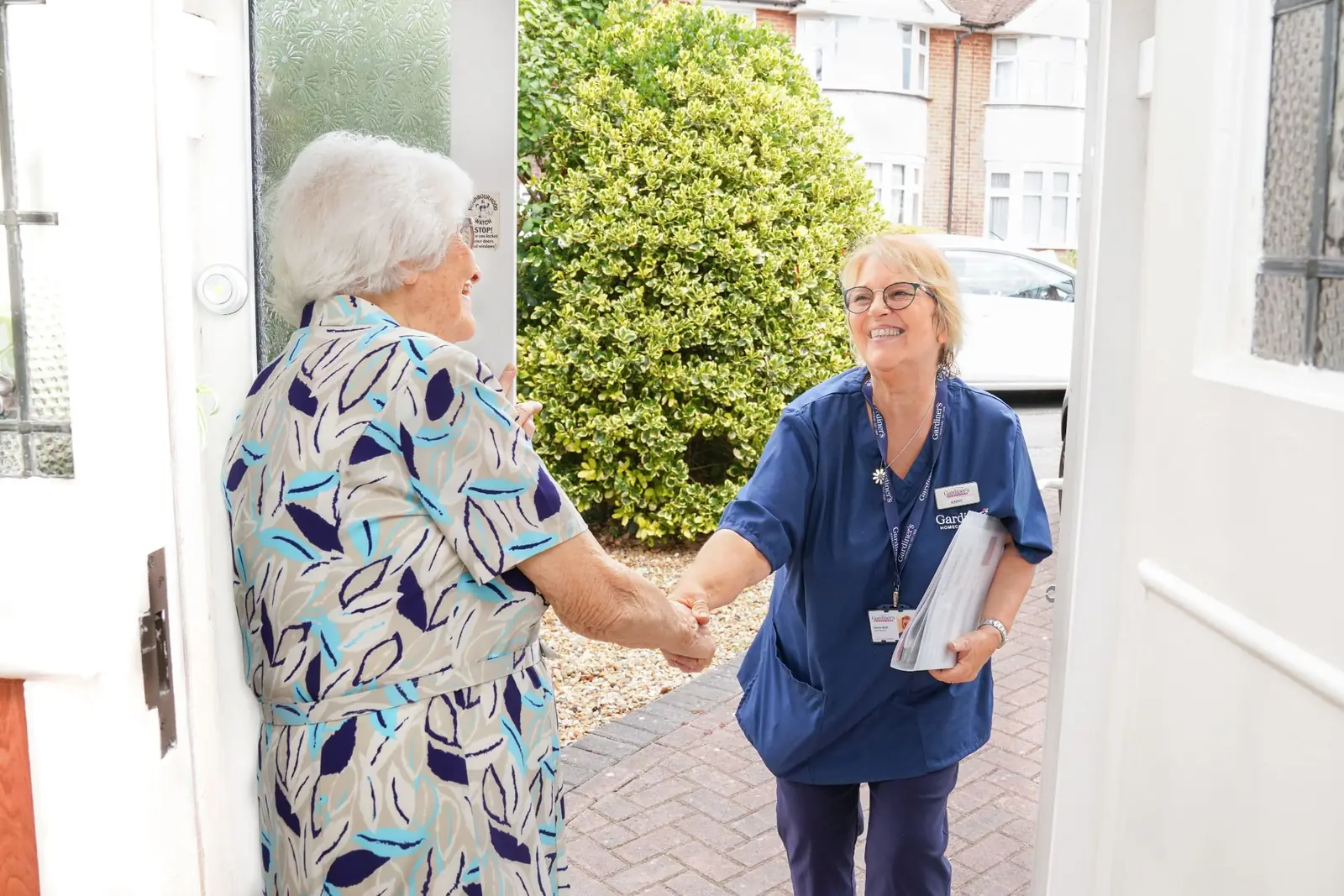
The carers who cover the area tend to live close by — in Goring, Streatley, or one of the surrounding villages. Our team has been with us for an average of eight years. What you get is a small, regular team rather than a different agency face each visit, working from a care plan we’ve built with you and your family.
Both sides of the river, and the parishes around them.
We cover the whole of Goring‑on‑Thames and Streatley, plus the surrounding parishes on both banks. If you’re unsure whether your road is in our area, give us a call.
- RG8Goring, Streatley, South Stoke, Moulsford, Cleeve, Aldworth, Lower Basildon, Whitchurch Hill, Goring Heath
Streets and lanes we know well
The high street in Goring — the shops, the surgery, the river‑end. The streets behind it climbing toward Cleeve. The Streatley side: the Bull at the crossroads, Reading Road, the steeper lanes up to Lardon Chase. Both villages have a mix of older cottages along the river and larger houses set back in their own grounds, often at the end of a long gravel drive. Practical things like wheelchair access, narrow staircases, and the awkward parking on some of the older lanes — we’ve worked round all of it before.
Beyond the villages themselves, we cover the smaller parishes that fold into the surrounding hills. South Stoke and Moulsford to the north on the Oxfordshire bank. Aldworth and Lower Basildon on the Berkshire side. The Goring Heath area inland to the east.
For families further into the Chilterns or the Berkshire Downs, live‑in care often makes more sense than running carers in and out several times a day. The geography is what it is.
Hospital catchment
Acute admissions are usually handled at the Royal Berkshire Hospital in Reading, though Oxfordshire residents are sometimes discharged from the John Radcliffe in Oxford. We can usually arrange same‑day or next‑day starts when discharge is imminent.
Funding routes
We work primarily with privately‑funded clients. We’re not a contracted provider to South Oxfordshire District Council (Goring) or West Berkshire Council (Streatley), but if you’ve been assessed for council-funded care you can use a direct payment from either towards our fees. Our rates sit above the standard council allowance, so a top‑up from private funds is usually needed.
A small, regular team
Every client has a small, regular team — usually two or three carers, the same faces week after week. Cover comes from within that team where possible, not from whoever the agency could find.
Two main ways to bring care home.
We’re a CQC‑regulated provider for both hourly and live‑in care. The right fit depends on what your family needs — for some, a couple of visits a week is enough; for others, a live‑in carer is the answer.
From a few visits a week to several a day. Minimum visit one hour — long enough to do the job properly. Specialist support for dementia, Parkinson’s, post‑operative recovery and end‑of‑life care.
About hourly careA trained carer living with you, around the clock. Often the right answer for the larger homes and the more rural houses out toward the Downs — and an alternative to a care home that lets a loved one stay where they belong.
About live‑in careClear pricing, no surprises.
Our rates are the same across our whole catchment — Goring and Streatley included. No hidden travel charges, no postcode loading, no setup fees.
Hourly visits
Live‑in care
What people ask us about local care.
Where are your carers based?
Most live close to the homes they visit — in Goring, Streatley, the surrounding villages, or in nearby Pangbourne. Local carers mean shorter travel, more reliable visits, and the kind of familiarity that matters in a long‑term care relationship.
Every carer is directly employed by Gardiner’s — not on a zero‑hours contract. Our team has been with us for an average of eight years.
Do you cover South Stoke, Moulsford, Aldworth and the smaller villages?
Yes — on the same terms as Goring and Streatley themselves. We also cover Lower Basildon, Whitchurch Hill, Goring Heath, and the parishes between Goring and Pangbourne.
For homes further into the Berkshire Downs or further north toward Wallingford, live‑in care often works better than hourly visits — the geography starts to make multiple short journeys impractical.
How quickly can care start?
From your first call to a carer at the door, we typically need a minimum of 48 hours. We’ll come to your home for a free assessment, agree a care plan, and introduce you to the small team who’ll be visiting.
We usually operate with a waiting list, we will let you know how long the wait may be when we do the assessment. If the situation is urgent — a sudden hospital discharge from the Royal Berkshire or John Radcliffe, for example — we’ll do everything we can to start sooner.
Goring is in Oxfordshire and Streatley is in Berkshire — does that affect funding?
It can — the council you deal with for adult social care depends which side of the bridge you live on. Goring residents go through South Oxfordshire District Council (with adult social care provided at county level by Oxfordshire County Council). Streatley residents go through West Berkshire Council, which is a unitary authority and handles adult social care directly.
We’re not on either council’s contracted provider list, but a direct payment from either can be put towards our fees if you’ve been assessed as eligible. As with most councils, the standard hourly allowance sits below our rates, so a top‑up from private funds is usually needed to cover the difference. We’re happy to talk through the numbers honestly — including, where it makes sense, pointing you toward providers whose rates match the council allowance more closely.
Is live-in care a good option for Goring & Streatley families?
Often, yes — particularly for the larger family homes set back from the village, and for the more rural houses out toward the Downs or up the lanes inland. Where running carers in and out several times a day becomes inefficient, a single live‑in carer who stays usually works out better — both for the person being cared for and for the household budget.
Our live‑in catchment extends across Oxfordshire, Berkshire and Hampshire. More about live‑in care.
How long have you been working in Goring & Streatley?
Since 1968 — the year Dorothy Gardiner founded the agency. Local families have been calling us from the start, and we’ve been answering the phone the same way ever since.
A free assessment, at home.
The first conversation is on the phone — five or ten minutes, no script, just to understand what you’re navigating. If it sounds like a fit, we’ll come out to the home in Goring or Streatley for a free assessment, usually within a few days.
The assessment is much more useful in the home where the care will actually happen. We’ll meet your loved one, look at the practicalities — medication, mobility, the layout of the house — and answer your questions. You’re under no obligation, and there’s no high‑pressure pitch.
A quick chat about care in Goring & Streatley.
Five or ten minutes on the phone. No script, no pressure — just an honest conversation about what you're navigating and whether we can help.
Mon–Fri 7:30am–5pm · Out of hours, leave a message and we’ll call back.