Home care in Reading, since 1968.
We’ve been arranging care for Reading families for fifty‑seven years. Hourly visits across the town and its suburbs, live‑in care across the wider region.
Speak to us about Reading0118 334 7474The town where we started.
Dorothy Gardiner founded the agency in Caversham, Reading, in 1968, originally as a nursing agency supplying qualified nurses to local families. Over the decades the work shifted — toward longer‑term, day‑to‑day support for older people who wanted to stay in their own homes — and the agency grew into the home care provider it is today.
The business has stayed in Reading the whole time, family‑run through three generations — same structure, same principles. We’re a Berkshire family business looking after Berkshire families, in the same town we’ve always been in.
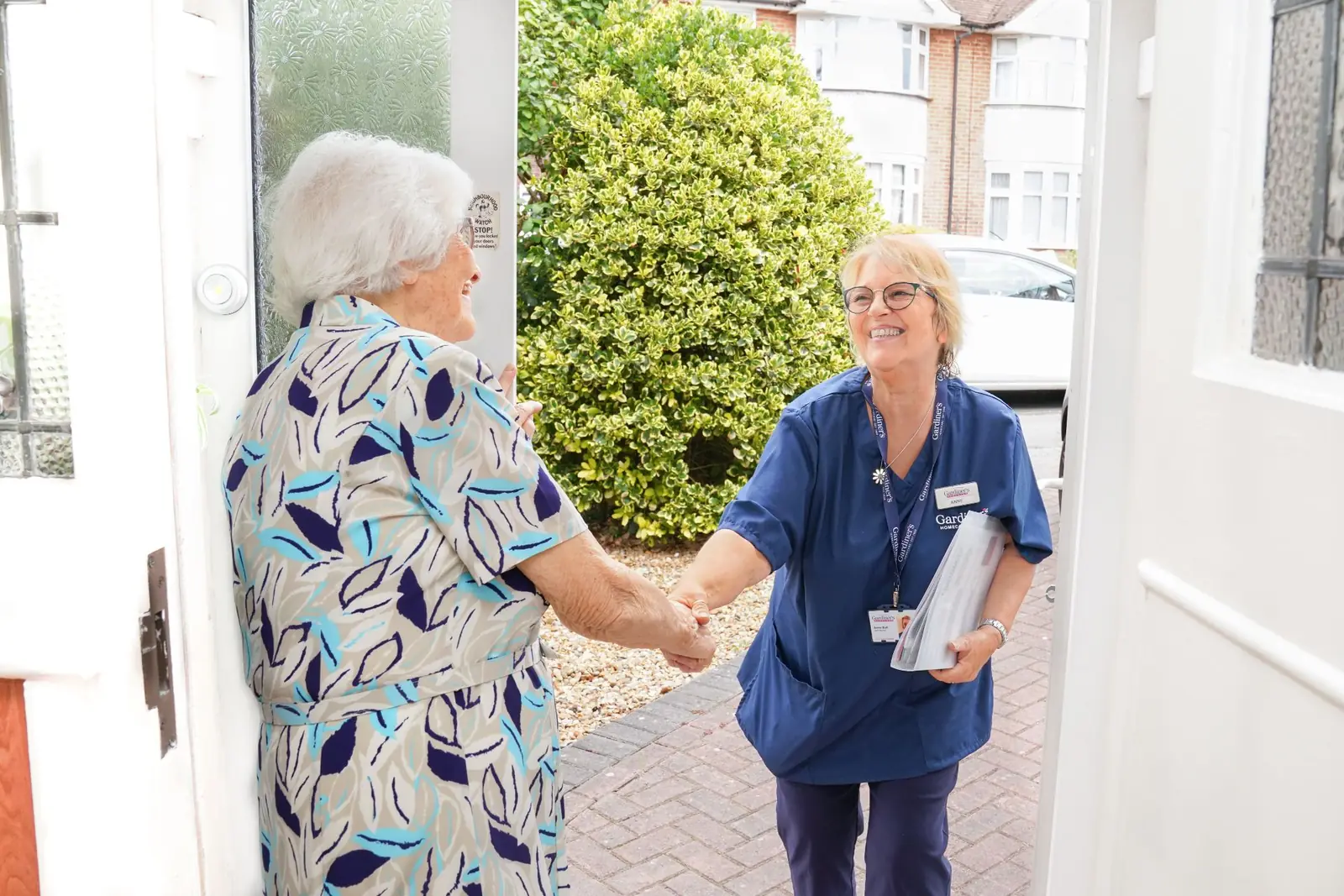
Most of the carers covering Reading live in Reading or its immediate suburbs. Every one of them is directly employed — not on a zero‑hours contract. Our team has been with us for an average of eight years, with some carers approaching twenty.
The town centre, and the suburbs around it.
We cover Reading from the town centre out to the edges of the borough — north and south of the river, and on into the surrounding villages. If you’re unsure whether your road is in our area, give us a call.
- RG1Reading town centre, Battle, Newtown, Park, Coley, Katesgrove
- RG2South Reading, Whitley, Whitley Wood, Coley Park, Three Mile Cross
- RG6Earley, Lower Earley, Whiteknights
- RG30 · RG31West Reading, Tilehurst, Calcot, Southcote, Norcot
Streets and suburbs we know well
Reading isn’t one place but many. The Victorian terraces of Newtown and Battle. The mixed‑tenure streets of Coley and Katesgrove. The quieter residential roads of Park and the area around Palmer Park. The mid‑century estates of Whitley and Whitley Wood. The newer developments out toward Lower Earley. Each has its own practicalities — the kind of housing, the parking, the way the streets work for someone with mobility issues.
West of the centre, Tilehurst and Calcot stretch out toward Pangbourne — a mix of older streets nearer town and larger family homes higher up. Earley and Lower Earley, east, tend toward the bigger family‑house estates of the 70s and 80s. Different layouts, different practicalities, all familiar to our care managers.
For families just beyond Reading Borough — Woodley (RG5), Twyford, Wokingham, the villages out toward Sonning — we usually still reach you. Live‑in care has a wider catchment again.
Hospital catchment
Most discharges go through the Royal Berkshire Hospital in central Reading, with occasional discharges from the John Radcliffe in Oxford. We can usually arrange a same‑day or next‑day start when discharge is imminent.
Funding routes
We work primarily with privately‑funded clients. We’re not a contracted provider to Reading Borough Council, but if you’ve been assessed for council-funded care you can use a direct payment towards our fees. Our rates sit above the standard council allowance, so a top‑up from private funds is usually needed.
A small, regular team
Every Reading client has a small, regular team — usually two or three carers, the same faces week after week. Cover comes from within that team where possible, not from whoever the agency could find.
Two main ways to bring care home.
We’re a CQC‑regulated provider for both hourly and live‑in care. The right fit depends on what your family needs — from a couple of visits a week to a full‑time live‑in carer.
From a few visits a week to several a day. Minimum visit one hour — long enough to do the job properly. Specialist support for dementia, Parkinson’s, post‑operative recovery and end‑of‑life care.
About hourly careA trained carer living with you, around the clock. An alternative to a care home that lets a loved one stay in their own house, with familiar surroundings, neighbours and routines intact.
About live‑in careClear pricing, no surprises.
Our rates are the same across our whole catchment — Reading included. No hidden travel charges, no postcode loading, no setup fees.
Hourly visits
Live‑in care
What people ask us about local care.
Where are your Reading carers based?
Most live in Reading itself or its immediate suburbs — Tilehurst, Earley, Whitley, Calcot, Caversham. Local carers mean shorter travel, more reliable visits, and the kind of familiarity that matters in a long‑term care relationship.
Every carer is directly employed by Gardiner’s — not on a zero‑hours contract. Our team has been with us for an average of eight years, with some carers approaching twenty.
Do you cover Earley, Tilehurst, Whitley and the other suburbs?
Yes — all of them, on the same terms as the town centre. We cover Earley and Lower Earley (RG6), Tilehurst, Calcot and Southcote (RG30/RG31), Whitley and Whitley Wood (RG2), and the Newtown, Battle, Coley and Katesgrove streets in central Reading (RG1). Caversham (RG4) has its own page — see our Caversham page.
For families just beyond Reading Borough — Woodley, Twyford, Wokingham, Sonning — we usually still reach you. Live‑in care has a wider catchment again.
How quickly can care start in Reading?
From your first call to a carer at the door, we typically need a minimum of 48 hours. We’ll come to your home for a free assessment, agree a care plan, and introduce you to the small team who’ll be visiting.
We usually operate with a waiting list, we will let you know how long the wait may be when we do the assessment. If the situation is urgent — a sudden hospital discharge from the Royal Berkshire, for example — we’ll do everything we can to start sooner.
Do you accept Reading Borough Council direct payments?
We’re not on Reading Borough Council’s contracted provider list, but if you’ve been assessed as eligible for council-funded care and choose to take it as a direct payment, you can use that payment towards our fees. Most of our clients fund their care privately, and some combine the two.
One thing to be aware of: our rates sit above the standard hourly allowance most councils pay, so direct payments usually need to be supplemented with a private top‑up to cover the difference. We can talk you through the numbers honestly — including, where it makes sense, pointing you toward providers whose rates match the council allowance more closely.
Is live-in care a good option for Reading families?
Often, yes — particularly for the larger family homes out toward Earley, Tilehurst and the edges of the borough. Where running carers in and out several times a day becomes inefficient (and expensive once you account for everyone’s travel), a single live‑in carer who stays often works out better — both for the person being cared for and for the household budget.
Our live‑in catchment extends across Berkshire, Oxfordshire and Hampshire. More about live‑in care.
How long have you been working in Reading?
Since 1968 — the year Dorothy Gardiner founded the agency. The business has been based in Reading the whole time. Reading families have been calling us from the start, and we’ve been answering the phone the same way ever since.
A free assessment, at home.
The first conversation is on the phone — five or ten minutes, no script, just to understand what you’re navigating. If it sounds like a fit, we’ll come out to the home in Reading for a free assessment, usually within a few days.
The assessment is much more useful in the home where the care will actually happen. We’ll meet your loved one, look at the practicalities — medication, mobility, the layout of the house — and answer your questions. You’re under no obligation, and there’s no high‑pressure pitch.
A quick chat about care in Reading.
Five or ten minutes on the phone. No script, no pressure — just an honest conversation about what you're navigating and whether we can help.
Mon–Fri 7:30am–5pm · Out of hours, leave a message and we’ll call back.